
$4,500.00
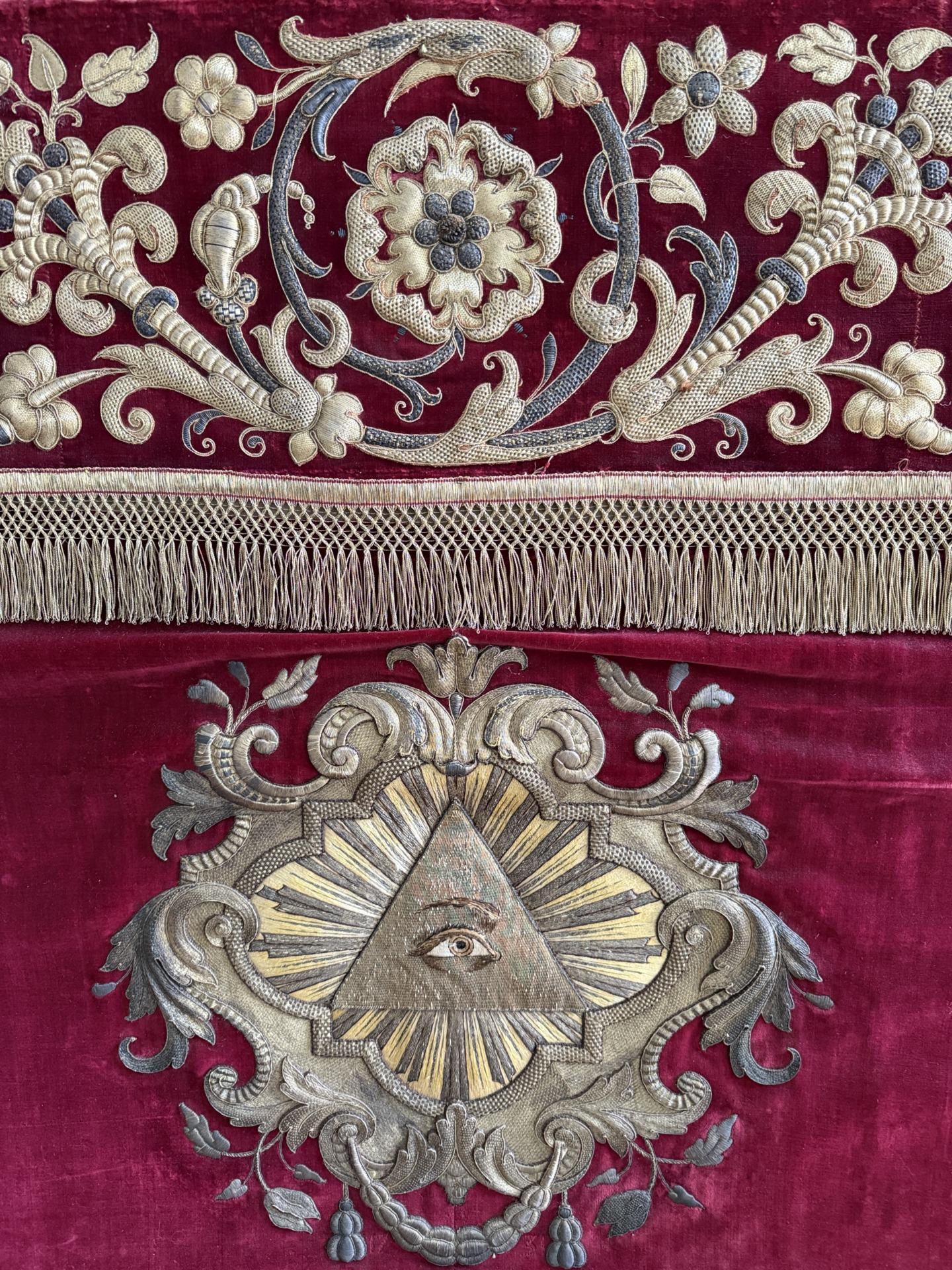
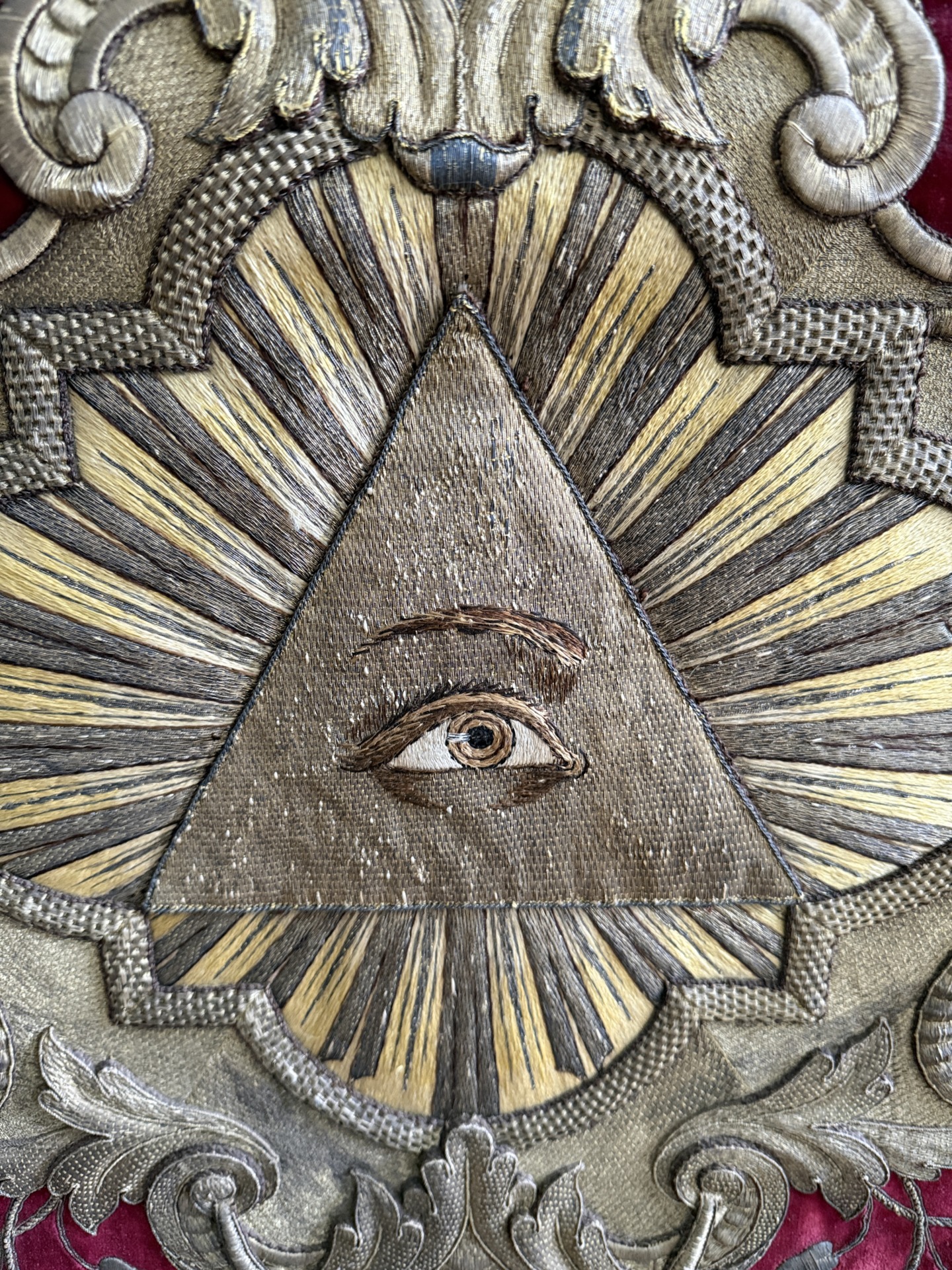
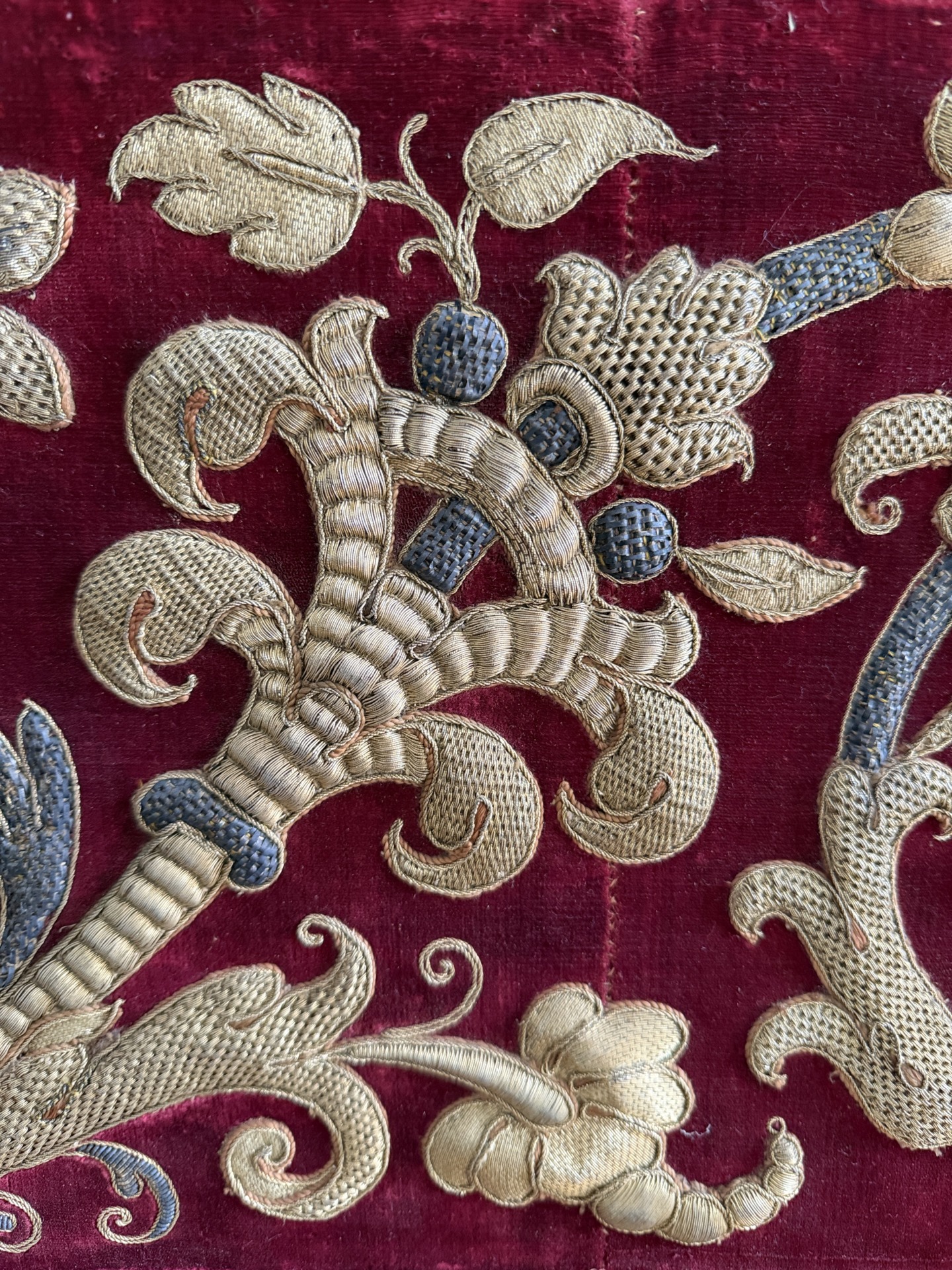
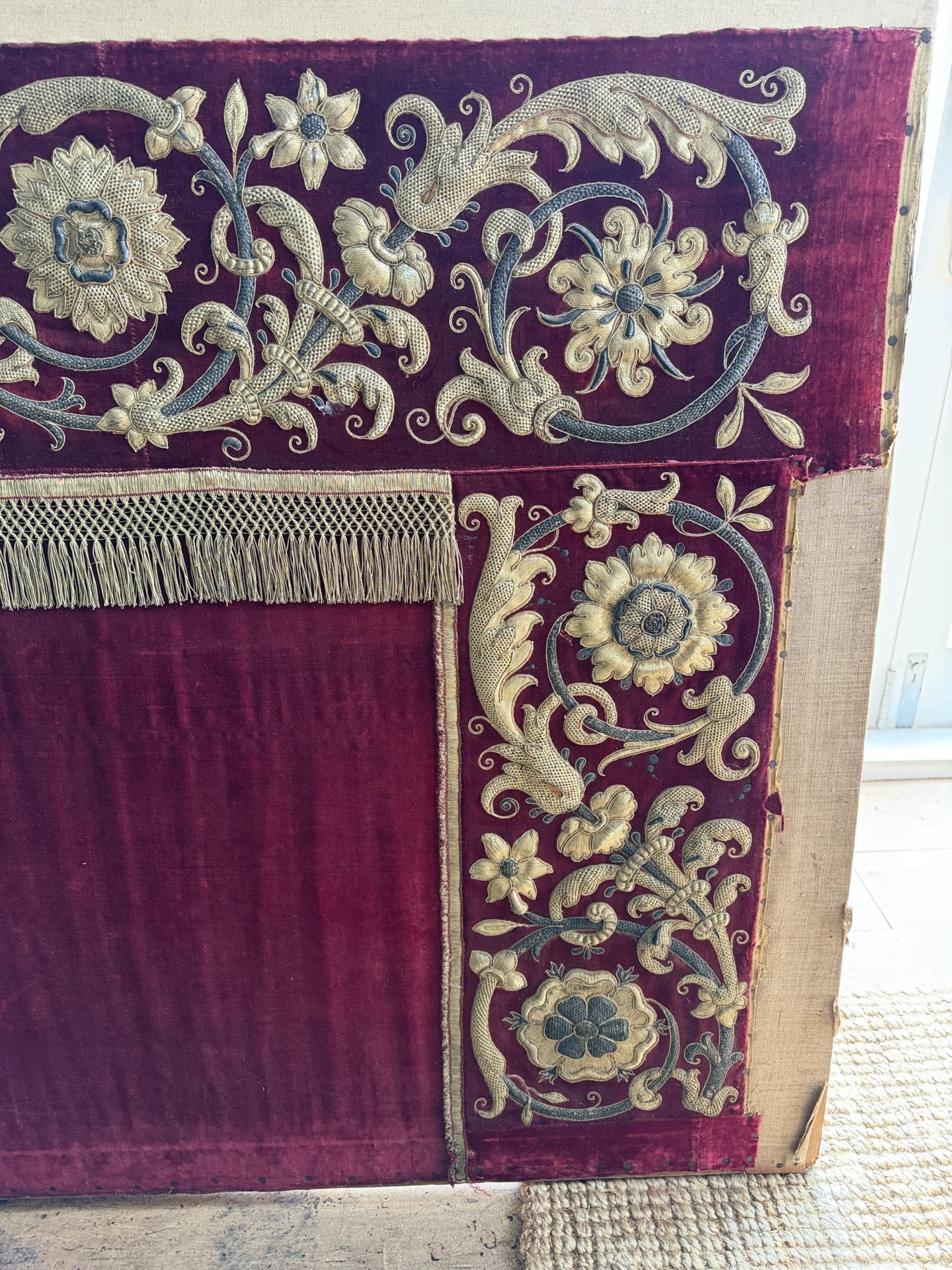
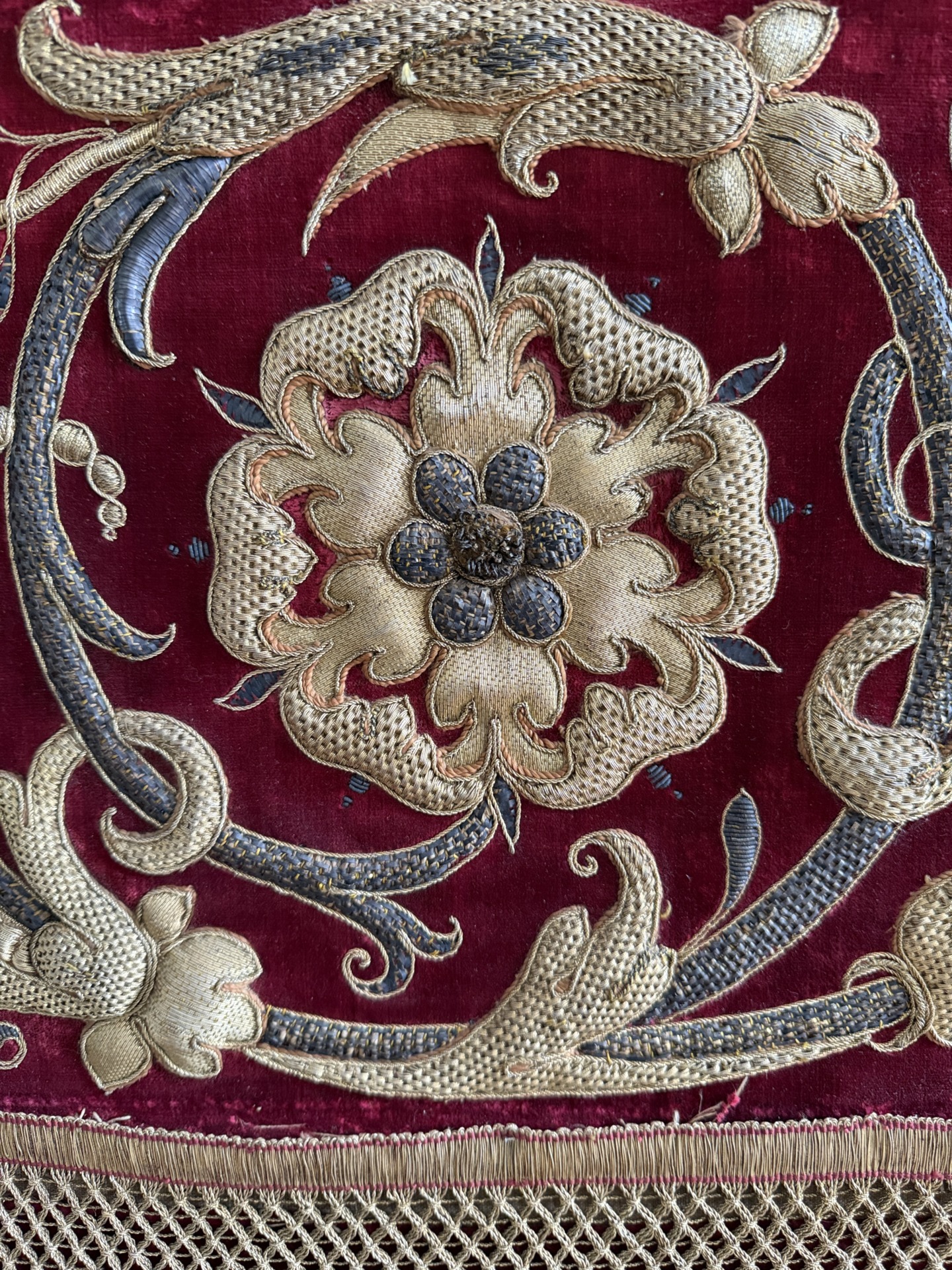
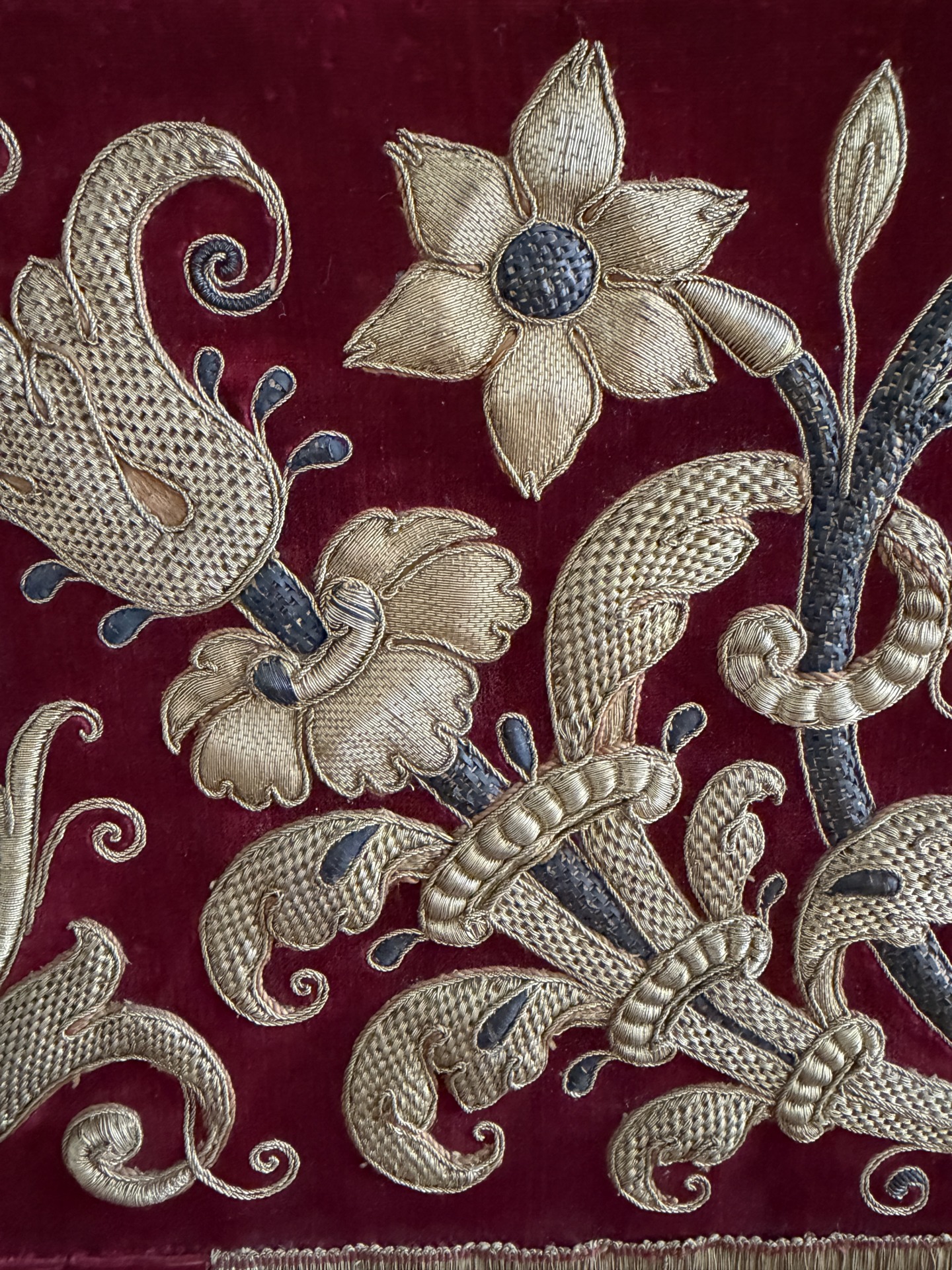
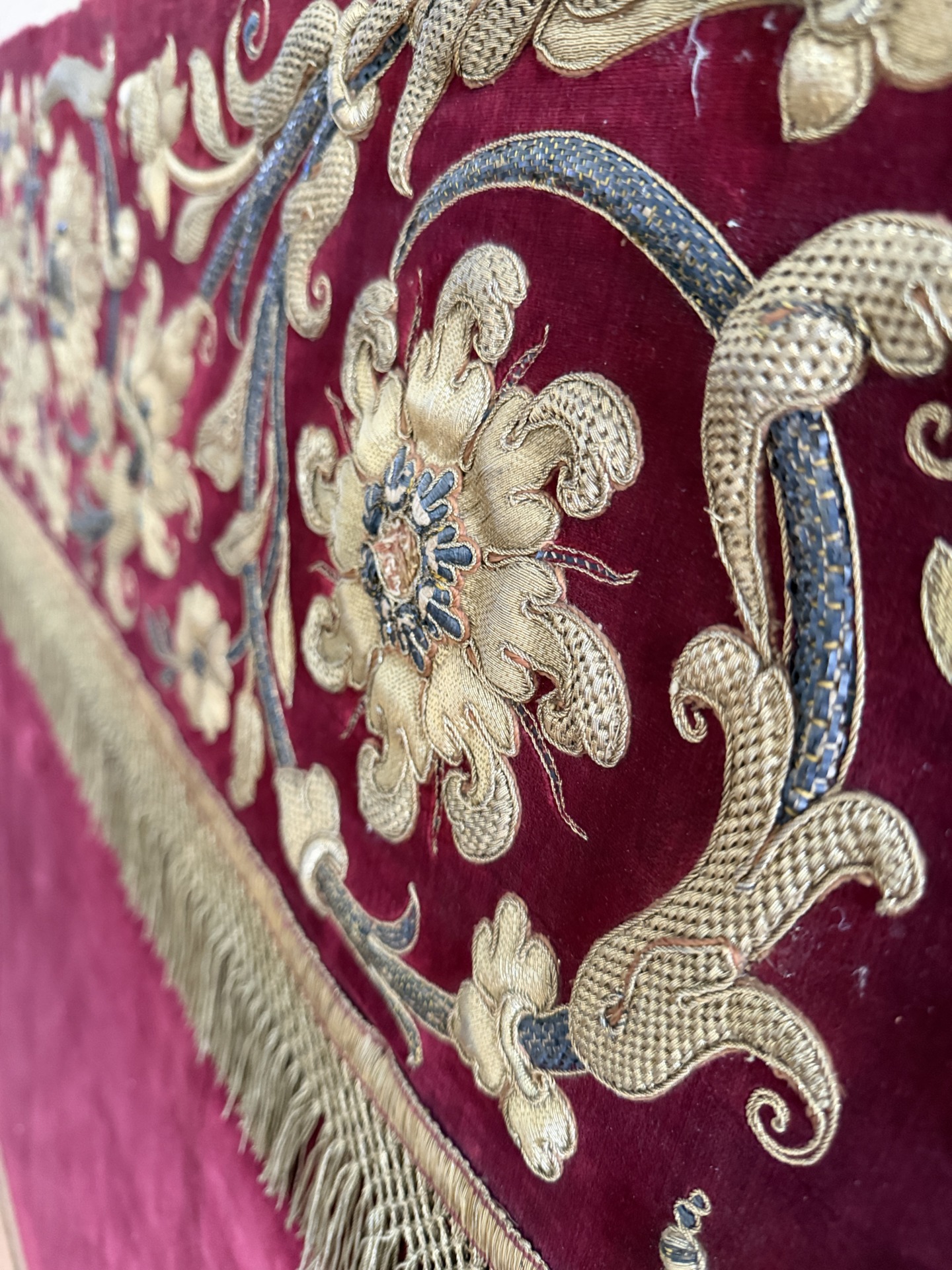
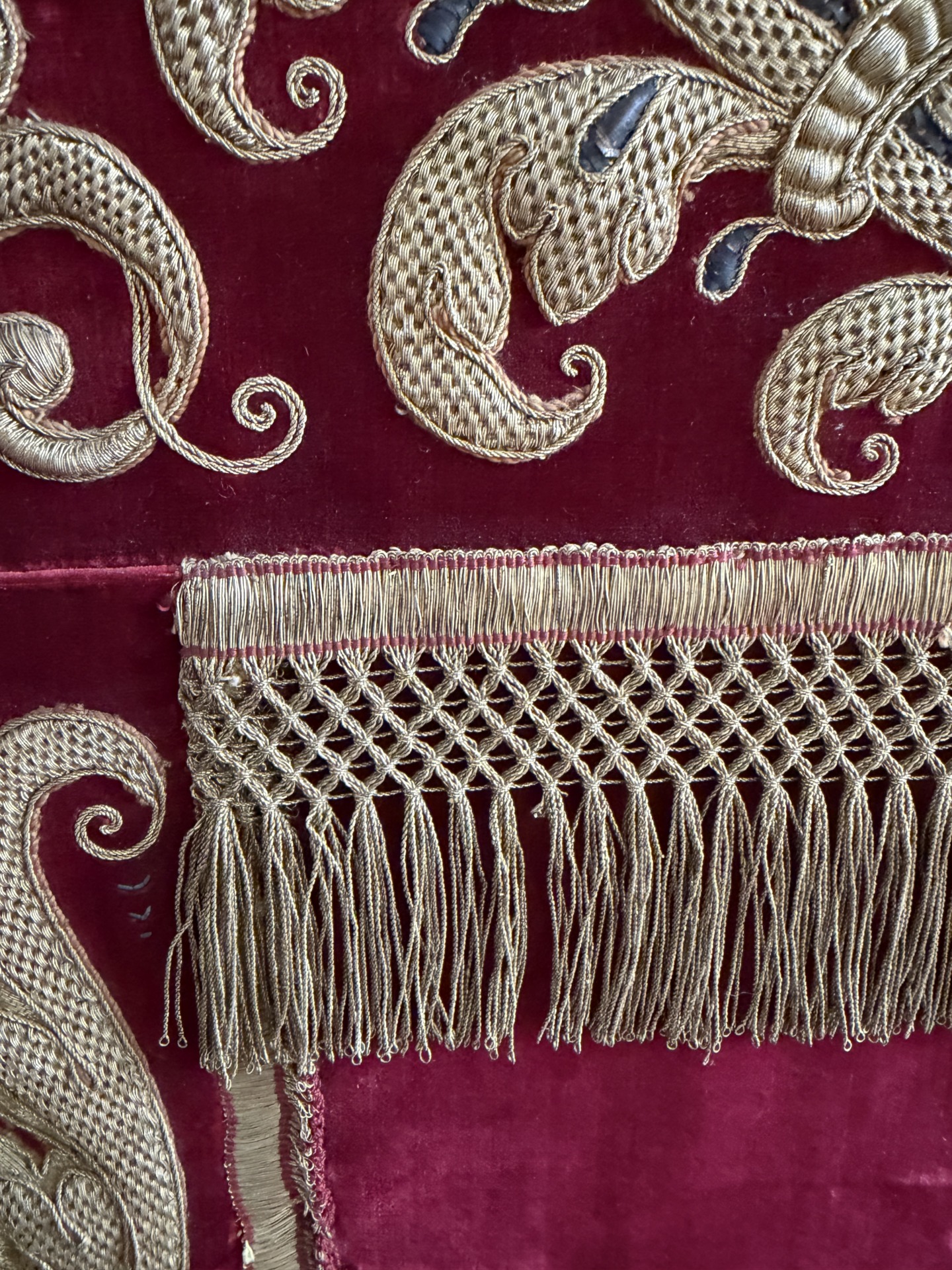
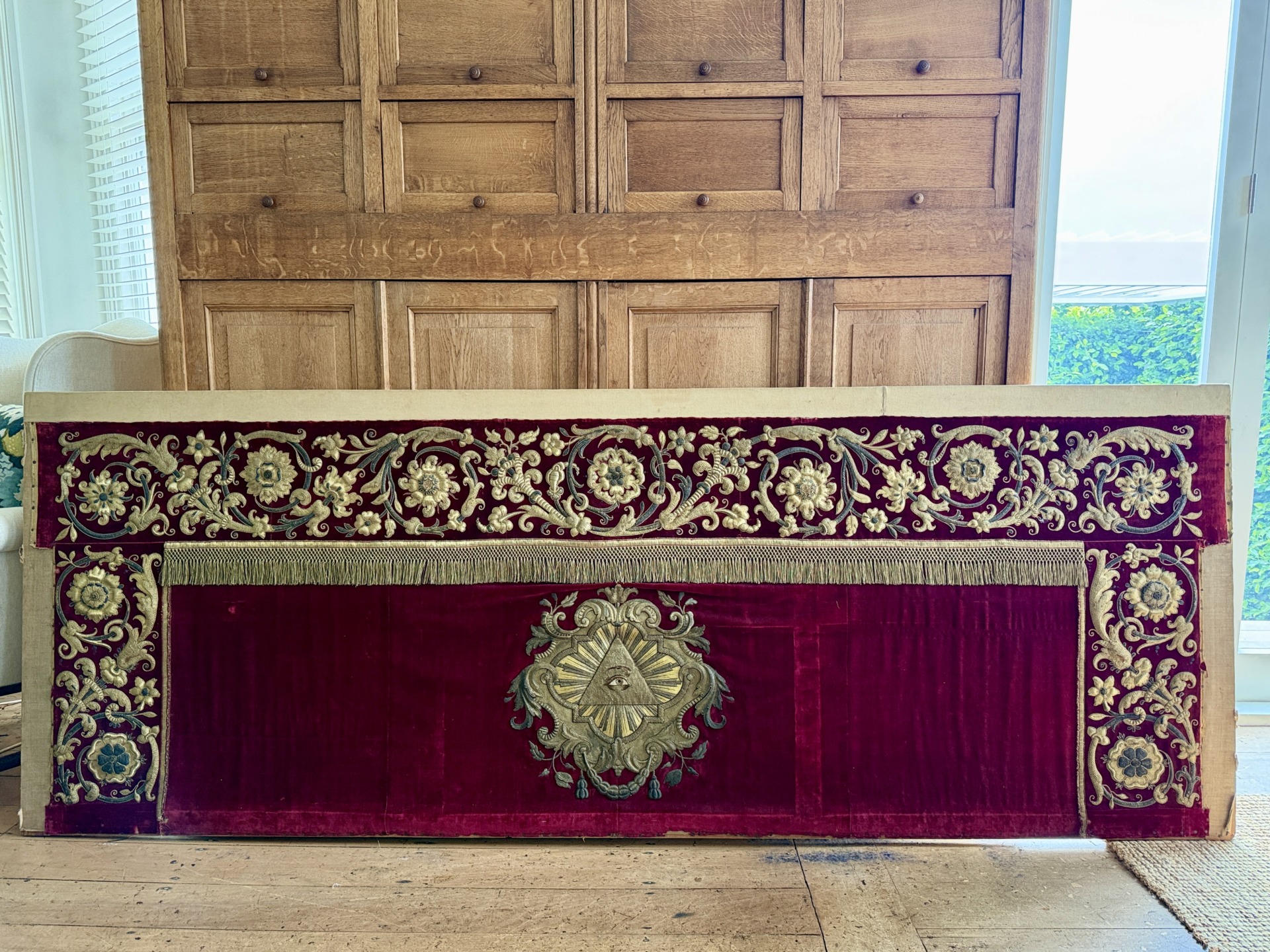
A wonderful antique ecclesiastical altar frontal, or antependium, dating to circa 1820. This exceptional textile is beautifully worked in rich crimson-red silk velvet and lavishly embellished with highly raised metallic gilt-thread embroidery. The central panel features the Eye of Providence, enclosed within a radiant triangle and surrounded by emanating rays — a longstanding Christian symbol representing the all-seeing and omnipresent nature of God. The emblem is framed within an elaborate cartouche, surrounded by intricate scrolling foliage and floral decoration executed in exceptionally dense raised bullion and metallic-thread embroidery. The heavily decorated upper superfrontal is particularly impressive, with scrolling botanical motifs worked in shimmering gilt metal thread, while the lower edge is finished with a coordinating antique gold metallic fringe. The quality and density of the embroidery, combined with the luxurious crimson velvet ground, make this a particularly striking example of early 19th-century ecclesiastical textile work. Originally created for ceremonial use within a church, such altar frontals were placed across the front of an altar during religious services. Today, this extraordinary piece could be displayed as a grand statement wall hanging, over-mantel textile or decorative tapestry, or creatively incorporated into an interior as a dramatic bedhead or headboard runner. Its rich colour, exceptional embroidery and strong architectural design would make a spectacular focal point in both traditional and contemporary interiors.
Stumpwork, a term coined in the 19th century, was known as raised or ‘embosted’ work in the 17th century when it was first popular. It is characterised by the use of highly raised motifs, often depicting people, animals and plants, sometimes in a scene from biblical or classical mythology. Motifs are normally worked separately from the ground fabric and then stitched in place (called a ‘slip’). Slips are embroidered onto a different piece of fabric, cut out and then padded with cotton, wool or carved wooden shapes before they are stitched in place. Clothing and foliage are often worked as needlelace slips, sometimes edged with wire which means most of the motif can protrude from the fabric. Stumpwork was normally worked on cream or white satin and stitched with gimp, silk and metal threads in various colours, or occasionally real hair. The raised, fragile nature of the work means that it embellished decorative rather than functional items such as caskets, pictures and mirror frames. These were luxury pieces, embroidered by wealthy women who were highly skilled. The origins of stumpwork are attributed to a European technique called ‘broderie en relief’, a highly padded and naturalistic form of ecclesiastical embroidery which can be traced back to the 15th century although elements of stumpwork such as needlelace slips, metal work and light padding can be seen in Elizabethan embroidery.
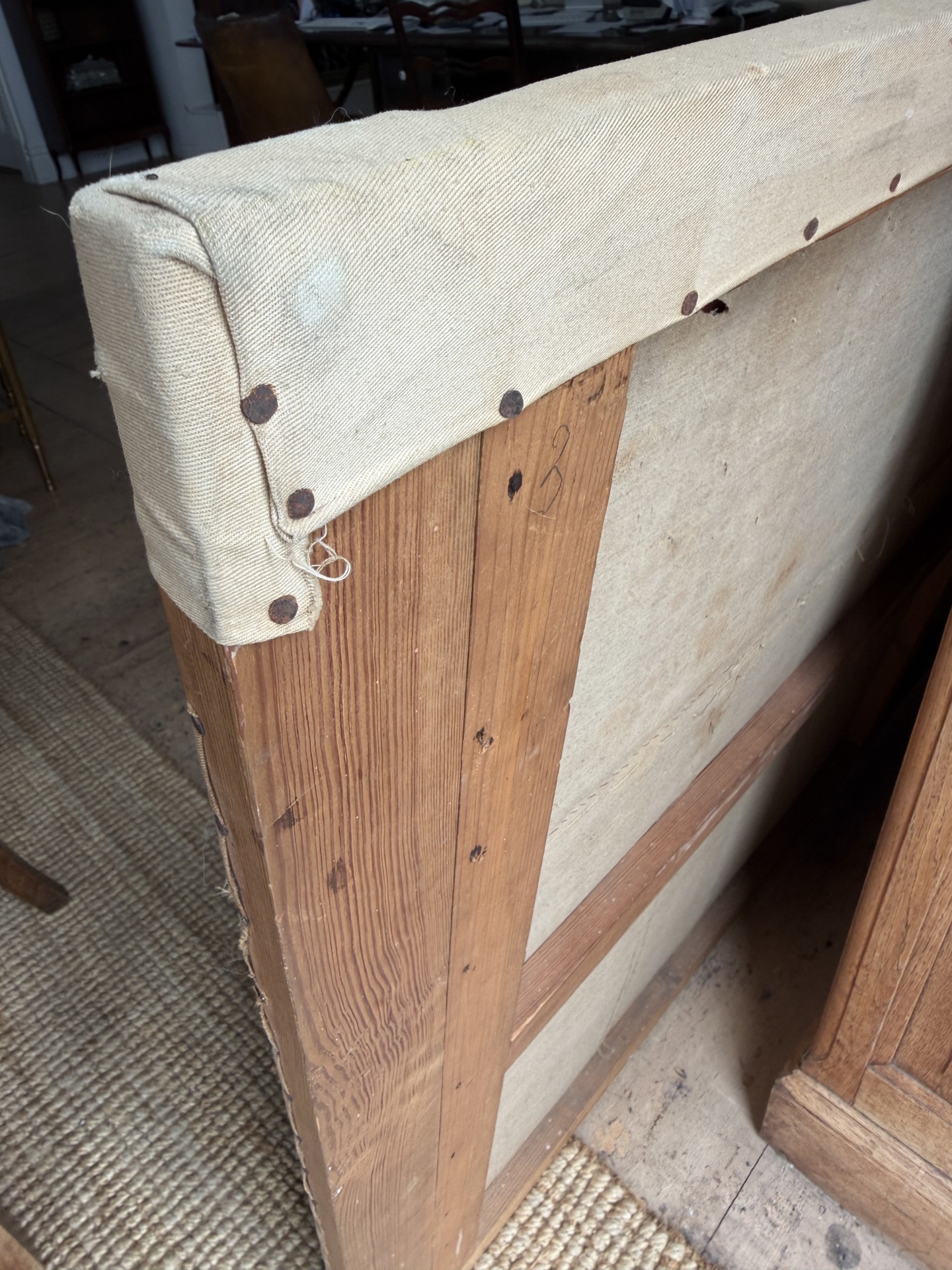
L2700mm x H1000mm x D25mm
Available to view at
60 Tyler Street,
Britomart Precinct,
Auckland 1010
Phone: +64 9 373 3034

Store hours:
Mon - Wed: 10am ~ 6pm
Thur: 10am ~ 7pm (late night)
Fri: 10am ~ 6pm
Sat: 10am ~ 5pm
Sun: 11am ~ 4pm
$4,500.00
L2700mm x H1000mm x D25mm
21 Ariki Street
Grey Lynn, Auckland
Phone: 09 360 9858
Mobile: 027 414 0081
Mon – Fri: 10am ~ 6pm
Sat: On Request
Sun: CLOSED